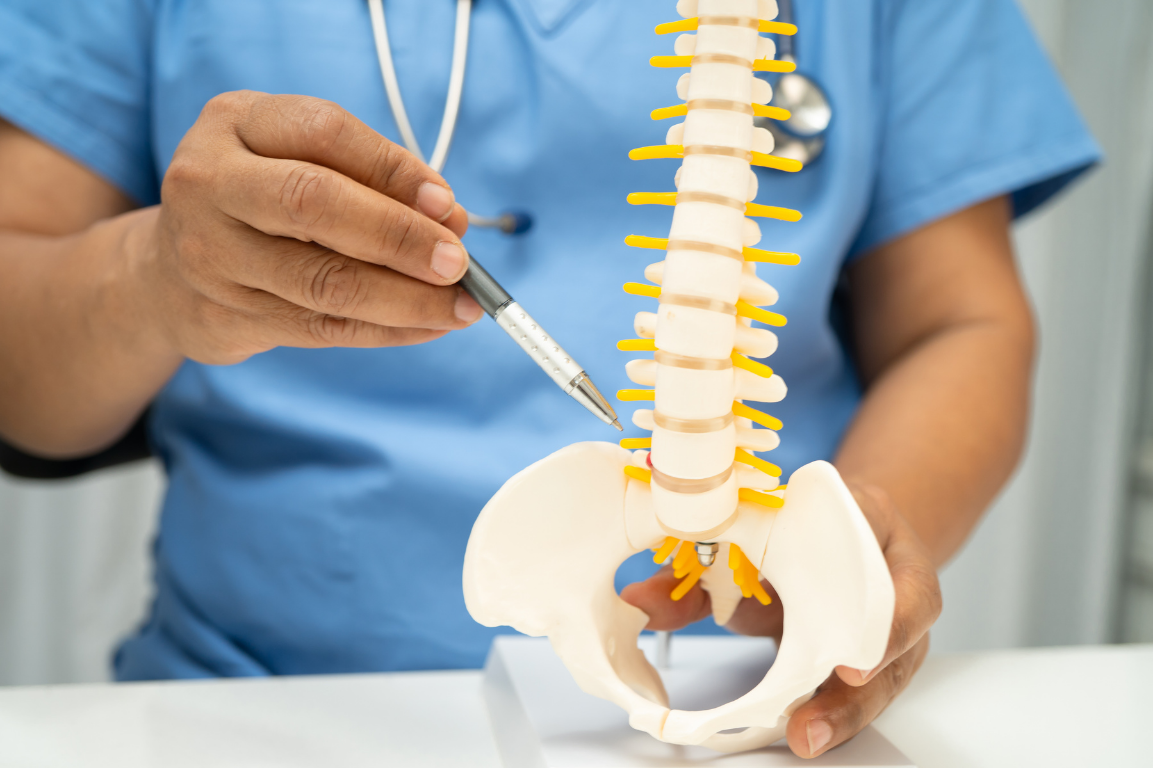



Herniated Disc Treatment
Spinal discs are the cushions between your vertebrae — a tough outer ring around a gel-like center. A disc herniates when the inner material pushes through the outer ring, where it can press on or chemically irritate nearby nerves. Herniations are most common in the lower back and neck.
Here's the fact that should shape your expectations: most herniated discs get better without surgery. The body reabsorbs much of the herniated material over time, and large studies show the majority of patients recover well with conservative care. Plenty of pain-free people have disc bulges on MRI — the image alone doesn't decide the treatment. Your symptoms and exam do.
Symptoms
A lumbar (low back) herniation typically causes back pain plus radiating leg pain — sciatica — with possible numbness, tingling, or weakness. A cervical (neck) herniation causes neck pain radiating into the shoulder, arm, or hand. Pain often worsens with sitting, bending, coughing, or sneezing. Red flags needing urgent care: progressive weakness, groin numbness, or bladder/bowel changes.
How we treat herniated discs
Accurate staging. Exam plus MRI review by a pain management physician establishes which disc, which nerve, and how severe.
Physical therapy builds the program: directional-preference exercise (many disc patients improve with specific repeated movements), progressive loading, and core stabilization.
Chiropractic care — gentle techniques and mobilization where appropriate; your chiropractor coordinates with the physician on what's safe for your disc.
Epidural steroid injections when radiating pain is too intense to rehab through — often the bridge that makes recovery possible.
Acupuncture for pain and muscle spasm along the way.
Surgical referral, honestly. The minority who need surgery — progressive neurological deficits or failed thorough conservative care — get told directly and referred properly.
FAQs
How long does a herniated disc take to heal?
Meaningful improvement typically comes within 6–12 weeks of active treatment; full recovery can take longer. The disc itself often partially reabsorbs over months.
Can a herniated disc heal on its own?
Often, yes — but "waiting it out" without rehab leaves you weak, deconditioned, and prone to recurrence. Active treatment speeds and secures the recovery.
Should I get an MRI right away?
Not always. Guidelines recommend imaging when red flags exist, symptoms are severe, or pain isn't improving on schedule — your physician will decide with you, not by default.