

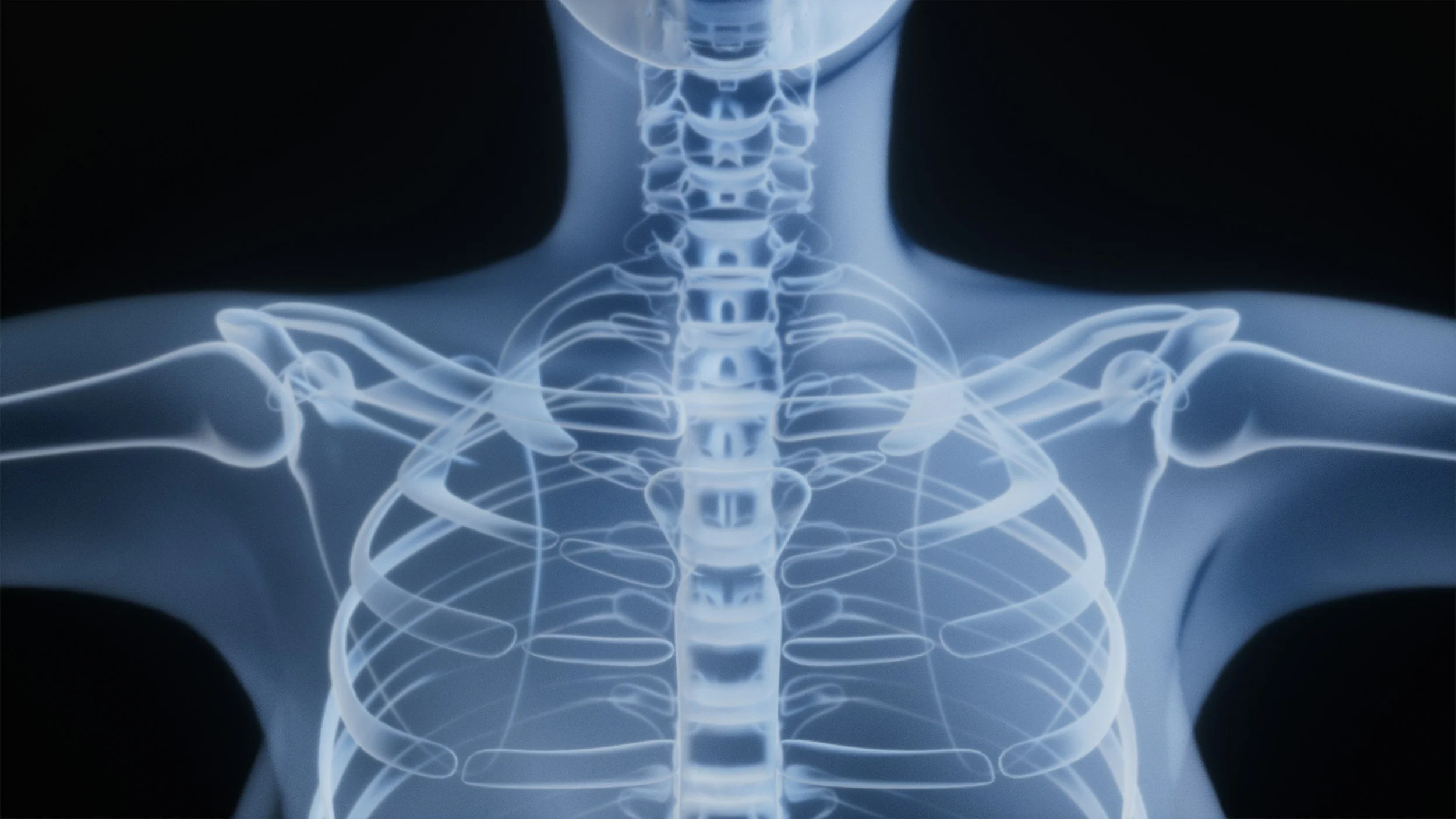
A spinal cord stimulator is a small implanted device that sends mild electrical pulses to the spinal cord, changing the pain signals traveling to your brain before you experience them. It does not fix a disc, a nerve or a joint. It changes how much of the pain gets through — which, for people whose nerve pain has outlasted everything more conservative, is often the difference between managing and not.
Two parts sit under the skin: thin leads placed in the epidural space near the nerves generating the pain, and a small generator, usually in the upper buttock or flank. You control it from a handheld remote or a phone app, turning it up, down or off.
It is deliberately a late option. Medication, Physical Therapy, injections and radiofrequency ablation come first, and a stimulator is what we discuss when those have been genuinely tried and the pain is still running your life.
Stimulation works best on nerve pain — burning, electric, shooting pain — rather than on mechanical, movement-triggered pain.
Nobody gets an implant on the strength of a conversation. The trial is a temporary version of the same thing: thin leads are placed through a needle in the epidural space, connected to an external generator you wear on a belt, and you go home and live normally with it for roughly a week. Nothing permanent is placed, and the leads are simply withdrawn at the end.
The point is to answer the question with your own experience rather than a prediction. What we and your insurer are looking for is at least a 50% reduction in the pain you are targeting — or the same reduction in the medication you need for it — together with a real improvement in what you can do. Insurers, Medicare included, also require a psychological evaluation before a permanent implant, which is standard rather than a judgment about you: chronic pain and mood are entangled, and the assessment is part of predicting who does well with the device.
If the trial does not clear that bar, we do not implant. That is the trial working, not failing.
If the trial worked, the permanent system is placed as an outpatient procedure. The leads go in the same position that worked during the trial and the generator sits under the skin. You go home the same day, with lifting and bending restrictions for a few weeks while everything settles into place.
Programming is not one-and-done. Most people come back to have the settings adjusted as they find what works for different activities and times of day, and modern systems hold several programs you can switch between yourself. Batteries are either rechargeable or replaced after several years, depending on the system.
The device is removable. That is worth saying plainly, because it is the part people are most anxious about: this is not a fusion or a nerve that has been cut. If it stops helping, or you simply do not want it, the hardware comes out.
A stimulator is a real procedure with real risks, and anyone who tells you otherwise is selling something. The common problems are mechanical rather than dangerous: a lead can shift out of position and need repositioning, the coverage can change over time, or the site can be sore for longer than expected. Infection is uncommon but is the reason the implant is treated as a sterile procedure and why you will be told to call about redness or fever rather than wait.
It is also not a cure. The realistic goal is a large reduction in pain and a return to things you had stopped doing — not zero. We would rather set that expectation now than have you find out afterwards.
A spinal cord stimulator is a late-stage option, and the honest framing is that it is for people whose pain has not responded to the things that come before it. If you have not yet had a proper course of Physical Therapy, or the interventional steps that suit your diagnosis, a stimulator is not the next move — and no insurer will authorize it either.
It is not offered where there is an active infection, where bleeding risk has not been reviewed and planned around, or where an untreated condition makes the trial unsafe to interpret. It also needs you to be able to charge and operate a device and to attend follow-up; that sounds administrative, but a stimulator nobody is managing does not work.
There is a further consideration people are rarely told about until late: an implanted stimulator changes how future MRI scans are handled. Many systems are MRI-conditional rather than freely compatible, and if your condition is likely to need repeated imaging, that belongs in the decision rather than in a leaflet afterwards.
The trial stage carries the smaller set: soreness where the leads enter, a risk of infection at the site, and the possibility that a lead moves and the coverage changes. Because the trial is temporary and reversible, a disappointing trial is information rather than a complication — it is the whole reason the trial exists.
The implant carries more. Infection is the one taken most seriously, because a device is involved and treating it can mean removing the system. Leads can migrate or fracture over time, the stimulation pattern can drift and need reprogramming, and a proportion of implants need a revision procedure at some point. Battery replacement is a planned event for non-rechargeable systems.
Less common: bleeding around the spine, nerve injury, and a leak of spinal fluid producing a positional headache. Some people find the sensation of stimulation itself uncomfortable, which the trial is designed to reveal before anything permanent happens.
Call us for fever, for redness or discharge at a site, for a sudden change in the coverage you were getting, or for new weakness.
Spinal cord stimulator trials are performed in office at these Mountain View Pain Center clinics: Northglenn, Lowry in Denver, InterQuest in north Colorado Springs, Mesa, and Westgate in Glendale. Fluoroscopic guidance is available at Westgate and Mesa.
Every other clinic coordinates the procedure to one of those five. That is worth stating plainly rather than leaving you to work it out: you can start at the clinic nearest you, be evaluated there, and have the procedure itself scheduled at the site equipped for it, without repeating the workup or starting again with a new team. Your notes, imaging and plan travel with you.
If you are not sure which clinic is nearest, the clinic pages list every location in Colorado and Arizona with directions and parking.
The trial comes first in every case. The permanent implant is placed only at Mountain View Surgical Specialists, our surgery center in Denver.
A spinal cord stimulator is billed to medical insurance rather than paid for out of pocket. What varies between plans is not usually whether it is covered but what has to be documented first.
Most plans expect a record of conservative care before an interventional step — some combination of Physical Therapy, Chiropractic, medication and time — and many require prior authorization on top of that. This is the main reason a procedure gets delayed, and it is avoidable: the documentation is built as you go rather than assembled in a hurry at the end.
We are in network with most Medicare Advantage plans; call to confirm yours. Workers' compensation is accepted at every location, in both states, across Pain Management, Physical Therapy, Chiropractic and Acupuncture, and auto injury claims are handled through med-pay or a lien we hold directly. Referrals are not required for any of it.
Your benefits are checked in advance — before the visit, not after. Nobody should find out what something costs afterwards. See insurance for the plans each state's clinics bill directly, and ask about any plan that is not listed.
Every clinic below has Chiropractic, Physical Therapy, Acupuncture and Pain Management on one chart, so care can move between them without a new referral.
Downtown out through the north, west, south and east suburbs.
Academy, InterQuest and Tenderfoot cover the north, central and south of the city.
Harmony in Fort Collins and our Greeley clinic serve Larimer and Weld counties.
Across the Valley, from the West Valley through Phoenix to the East Valley.
Yes — both. The same physicians who evaluate you run the trial and place the permanent system, so nothing is handed off mid-course.
Roughly a week. You wear an external generator, keep to your normal routine as far as possible, and we compare notes at the end.
Because insurers, Medicare among them, require it before a permanent implant, and because it genuinely helps predict who does well. It is a standard step in the pathway, not a comment on you.
Yes, when the criteria are met — a documented trial showing at least 50% improvement, the psychological evaluation, and evidence that more conservative treatment has already been tried. See Medicare in Colorado or Medicare in Arizona.
Many current systems are MRI-conditional, meaning scans are possible under specific conditions. Which conditions depends on the system you have, so tell any imaging department that you have a stimulator and bring your device card.
Depends on the system and the program. Some produce a light tingling over the painful area; others work at frequencies you do not feel at all. You control the intensity, and you can turn it off.
No. You can request an evaluation directly in Colorado or Arizona. Most people who end up with a stimulator get there through a course of Pain Management rather than asking for one on day one.
Nothing is implanted. The trial leads are removed in the office, the skin heals in a few days, and the Pain Management physician moves on to the next option on the plan. That is the point of trialling it first.
The trial is performed in office: spinal cord stimulator in Denver (Northglenn), spinal cord stimulator in Colorado Springs (InterQuest), and spinal cord stimulator in Phoenix (Mesa and Westgate).
Each page sets out who the procedure is for, what the appointment involves, and how it is billed.
Spinal cord stimulation is offered by our Pain Management physicians in Colorado and Arizona — see the full clinic map, Colorado or Arizona.