

Get evaluated this week, even if you feel mostly fine.
If you have been in a collision in Northglenn or Thornton, get evaluated this week — even if you feel mostly fine. Whiplash and soft-tissue injuries typically peak two to three days after impact, and a gap between the crash and your first medical visit is the most common reason an injury claim gets reduced.
Mountain View Pain Center's Northglenn clinic has board-certified Pain Management providers and licensed chiropractors in the same building, so your exam, imaging referral and first treatment happen together rather than across offices over three weeks.
Same-week appointments are typically available.
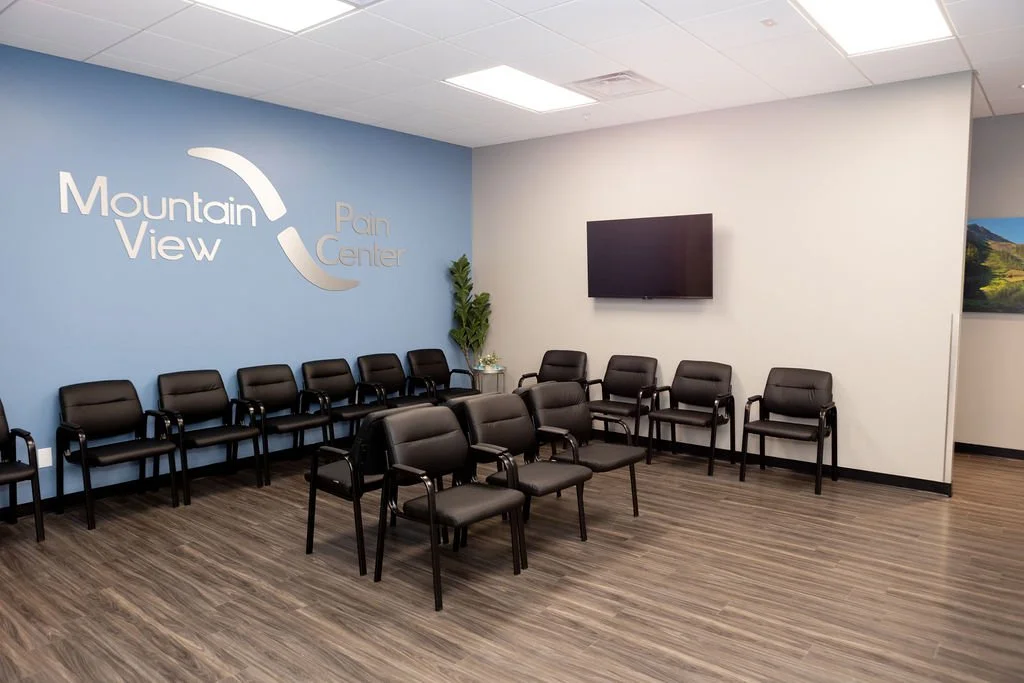
Whiplash and auto-injury work is part of the training every chiropractor here has done. Care starts there and does not stop there.
The people treating you are a team — board-certified Pain Management physicians, the advanced-practice providers they supervise, chiropractors and physical therapists — and every one of them writes to the same chart, which is why the record going to an adjuster or attorney holds together.
For accident patients, medical transportation is available and billable to the lien, so the drive is not what decides whether you finish treatment.
Any clinic can run the visit in Spanish through real-time translation.
We work alongside your attorney from the first visit to the last.
Call (720) 749-5599 and we will get you in this week.
Most people need both, which is why care fragments so easily after a crash. A physician diagnoses the injury, orders imaging where the exam warrants it, and documents causation. A chiropractor treats the soft-tissue and joint injuries that make up the majority of crash cases.
At our Northglenn clinic they work from the same chart and the same plan — so you are not repeating your history to a second practice or waiting three weeks between referrals. When conservative care runs out of road, interventional Pain Management is in the same building.
The term whiplash covers a rapid back-and-forth motion of the neck that strains cervical spine muscles, ligaments and discs. It happens at impact speeds well under 15 mph — a low-speed rear-ending at a 120th Avenue light produces it as readily as a highway collision.
Symptoms usually appear one to three days after the crash: neck stiffness and pain, headaches beginning at the base of the skull, shoulder and upper back pain, reduced range of motion, dizziness, and sometimes tingling into the arms. Six to twelve weeks of active treatment resolves most cases.
The collisions we see most cluster on the same roads, with rush-hour rear-endings on the I-25 north corridor accounting for a large share.
Get evaluated even without obvious pain. Adrenaline masks injury for the first one to three days.
Say yes to documentation. A dated clinical record from week one is the strongest evidence a claim can have.
Keep every appointment. A disc injury can declare itself in week three, and a complete record shows what changed and when.
Bring your claim number and adjuster contact so billing goes through auto med-pay rather than your health deductible.
Personal injury Chiropractic differs from routine Chiropractic mainly in documentation: exam findings, mechanism of injury, objective measurements and treatment response all need to connect your injury to the accident in a way that survives an adjuster's review. Our records are prepared to that standard. You do not need an attorney to be treated.
Colorado is an at-fault state. Med-pay — medical payments coverage — is an optional Colorado add-on that most people have, and it typically pays for crash care while your health deductible stays untouched. Med-pay pays out no matter which driver was responsible.
Billing goes to auto med-pay, with a lien basis available when an attorney is involved. Bring the claim number and your adjuster's details along to the first appointment.






Within seven days, and ideally within the first three. It is common for soft-tissue injuries to be at their worst two or three days post-impact.
Yes. The Northglenn clinic on Grant Street serves Northglenn, Thornton, Westminster, Broomfield, Federal Heights and north Denver.
Both of them, ideally without driving between two separate practices. A physician diagnoses and orders imaging; a chiropractor treats the soft-tissue and joint injuries that make up most crash cases. Our clinic does both under one roof.
Usually not. The usual route in Colorado is auto med-pay, not your health plan.
Get evaluated anyway. An unremarkable week-one examination is useful evidence; pain that shows up in week three with no earlier record is much harder to attribute to the collision.
Yes. Colorado med-pay applies whoever caused the crash.
Yes. After a crash the bill goes to auto med-pay, or we hold the lien in-house — either way you are not out of pocket while the claim is live. Verification of benefits happens before you arrive, not later.
Your policy's uninsured or underinsured motorist coverage may pick it up. Colorado law makes insurers offer med-pay; unless you turned it down in writing it applies, and it usually pays regardless of fault. We work out what is available before you arrive.
Yes. We work with your attorney throughout and send records to their office as they are made.
Yes. Medical transportation is available and can be charged to the lien.
Car accident injury treatment across Colorado and Arizona · Denver.