


Dr. Randall Kertz is a Chiropractor at Mountain View Pain Center, seeing patients at Deer Valley in north Phoenix and Peoria. He practiced in Chicago for more than twenty-three years and is a published author and lecturer on injury prevention for musicians. No referral is needed, and our goal is to get you in within the same week.
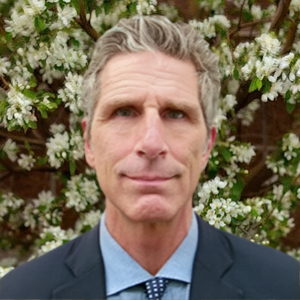
Dr. Randall Kertz comes to Arizona from Chicago, where he maintained a private practice as a chiropractor and acupuncturist for over 23 years. A 1999 graduate of the National College of Chiropractic, Dr. Kertz has combined his careers in healthcare and music—serving as a noted author and lecturer on injury prevention for musicians, as well as a product consultant and developer of ergonomic products for the music industry. His practice philosophy is to help his patients improve their health and achieve an enhanced state of well-being.
Dr. Kertz spent more than twenty-three years in private practice in Chicago before he came to Arizona, and a good part of that time went to a question most clinicians never have to answer: what happens to a spine that spends four hours a day behind a cello, a bass or a drum kit. He has written and lectured on injury prevention for musicians, and he has worked as a product consultant and developer of ergonomic equipment for the music industry.
That work is a study of posture under load, and it generalizes past the practice room. The patient in front of him is more often a driver, a nurse at the end of a twelve-hour shift, or someone whose desk was set up in a hurry, and the same three questions apply: which joints are doing work they were not built for, what is guarding to protect them, and what has to change outside the treatment room for an adjustment to hold.
The problems he sees most are lower back pain, neck pain, sciatica, herniated discs, headaches and migraines and injuries after a car accident.
Three techniques are used here, and which one you get depends on you rather than on habit. Diversified is the hands-on adjustment most people picture, with the audible release. Drop-table, also called Thompson, uses a table section that drops a short distance so the force needed is much lower. Activator is a small spring-loaded instrument that delivers a single controlled impulse and no twisting at all — which is what makes it the usual choice for someone nervous, someone older, or a joint too irritable to handle more.
Two other things are available alongside: spinal decompression, a motorised traction table used for disc-related leg or arm symptoms, and dry needling for the muscular component that survives the adjustment.
The part that matters most is what happens when Chiropractic is not the answer. Physical Therapy, Pain Management and Acupuncture are in the same building and on the same chart, so a change of direction is a conversation rather than a new referral and another wait.
Dr. Kertz sees patients at Deer Valley and Peoria. Each page lists the address, the hours and what a first visit involves.
For the rest of the team, see the Arizona Chiropractic providers page, or chiropractic care nearby for how it works locally.
No referral is needed for Chiropractic, Physical Therapy, Pain Management or Acupuncture, and our goal is to get you in within the same week.
Mountain View Pain Center is contracted with Medicare and with most major commercial plans, and we also work with personal-injury liens and workers’ compensation. Medicare covers spinal manipulation only — not the examination, the modalities or the therapies around it, which are billed separately. In Arizona, AHCCCS is accepted for Pain Management only — not for Chiropractic, Physical Therapy or Acupuncture. Our team can verify your benefits before your first visit.
Availability changes from week to week, so the honest answer is to ask. Request an appointment online and say you would like to see Dr. Kertz, or call the Arizona number and our team will tell you what is open at Deer Valley and Peoria. No referral is needed, and our goal is to get you in within the same week.
At two Arizona clinics: Deer Valley in north Phoenix and Peoria. Both are Mountain View Pain Center locations, so if your care needs to move between Chiropractic, Physical Therapy and Pain Management it moves on one chart rather than starting over somewhere else.
No. Chiropractic at Mountain View Pain Center does not require a referral, and neither do Physical Therapy, Pain Management or Acupuncture. If your own plan requires one, our team will tell you when they verify your benefits.
Medicare covers spinal manipulation only. The examination, imaging and any therapies performed alongside the adjustment are not covered under Medicare for chiropractic, so our team goes through what is covered and what is not before your first visit rather than after it.
Yes. Injury prevention for musicians is a subject Dr. Kertz has written and lectured on, and the assessment starts where the load actually is: how the instrument is held, how long the sessions run, and which joints are absorbing the work. Bring those details to the first visit if that is the pattern you are describing.
Day or night, seven days a week — and we’ll text you back to get you scheduled. No referral is needed, and our goal is to see you within the same week. Arizona scheduling runs through one number for every Arizona clinic: (602) 325-2024.