

When an arthritic or inflamed joint is too painful to rehabilitate, a precisely placed injection can settle it enough to make strengthening possible — and strengthening is what actually changes the trajectory. We use joint injections as an enabler, not a subscription.

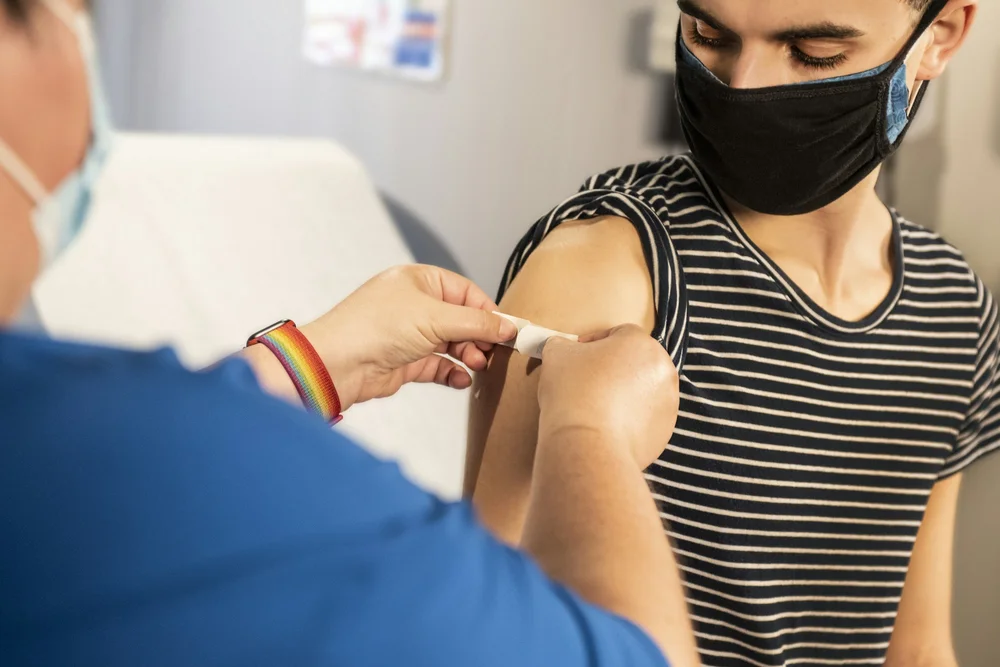
Every joint injection here comes with the question "what will you do with the relief?" already answered: a strengthening program through our Physical Therapy team, activity modification that keeps you moving, and honest monitoring. If injections are merely maintaining a joint that's structurally done, we'll say so and help you have the replacement conversation with the right surgeon at the right time.
Most of the anxiety about a joint injection comes from not knowing how the visit runs. Here is the shape of it.
Tell us about any blood thinner well ahead of the appointment. Whether it needs pausing is a decision for the physician who prescribed it, and we coordinate that rather than leaving it to you. Say so too if you are pregnant or might be, if you have an active infection anywhere, if you are diabetic — a steroid can lift blood sugar for a few days — or if you have had a reaction to contrast or local anesthetic before. Eat normally unless we tell you otherwise, and bring your insurance card, a photo ID and a list of your medications.
You are positioned so the target is accessible, the skin is cleaned and numbed, and the needle is placed under imaging guidance so its position is confirmed rather than assumed. That guidance is the difference between treating the structure we identified and treating the neighbourhood around it. The procedure itself is measured in minutes; you are in the building longer than you are on the table.
Whether you need someone to drive you depends on whether any sedation is used, which we confirm when we schedule so it is not a surprise on the day. Plan a quiet rest of the day either way.
The joint is often sore for a day or two before it is better, and a steroid typically takes several days to take full effect. If the injection included local anesthetic you may get a few hours of good relief first, then a return of the pain — that is the anesthetic wearing off, not a failure.
Ice the site if it is sore. Keep moving, but skip anything strenuous for a day or two unless you have been told otherwise. Write down what changes and when — how much the pain drops, for how long, and what you could do that you could not before. That record is what tells us whether to repeat, adjust or change course, and it is more useful than trying to remember at the next visit.
An injection settles a flare. It does not strengthen the muscle around the joint or change how you load it, and an arthritic joint that goes back to exactly the same demands tends to flare again. The window is best spent on Physical Therapy for the muscles supporting that joint.
That is the practical reason everything sits in one building at Mountain View Pain Center. The physician who performed the procedure and the therapist working on the movement problem underneath it read the same chart, so the plan adjusts on what actually happened rather than on what someone was told at a follow-up weeks later.
A joint injection is for pain coming from inside the joint. If the examination points to the tendon around it, the bursa over it, or a referred pain from the spine, injecting the joint treats the wrong structure — and that is a more common mistake than people realize, because the pain feels like it is in the joint either way.
It is deferred where there is any suspicion of infection in or near the joint, where anticoagulation has not been reviewed, and where there is a known allergy to the agents used. Poorly controlled diabetes is not a barrier but does change the plan, since steroid raises blood sugar for several days.
There is also a limit on repetition. Steroid into the same joint over and over is not a long-term strategy — the effect of repeated doses on cartilage and on the tissues around the joint is the reason we space them and the reason we would rather spend the window they buy on strengthening. If a joint is needing an injection every few months, the question is what the plan is missing, not when the next one is due.
Most people get a sore joint for a day or two. A post-injection flare — the joint hurting more for roughly the first forty-eight hours before it improves — is common enough that it is worth expecting rather than worrying about, and ice helps.
Common and temporary: bruising, facial flushing, a few restless nights, and a rise in blood sugar in people with diabetes.
Less common: a pale patch or a dimple in the skin where the steroid went, which can be permanent and is the reason superficial joints are injected carefully; bleeding into the joint; and rarely, infection inside the joint, which is uncommon but serious and treated urgently.
Call us for a joint that becomes hot, very swollen and increasingly painful after the first two days rather than settling, and for any fever. That combination is the one we want to hear about immediately.
Shoulder, knee and other joint injections are performed in office at every Mountain View Pain Center clinic. Image-guided injections of the spine, hip and sacroiliac joint are performed at Northglenn, InterQuest in north Colorado Springs, Mesa, and Westgate in Glendale. Fluoroscopic guidance is available at Westgate and Mesa.
Every other clinic coordinates the procedure to one of those four. That is worth stating plainly rather than leaving you to work it out: you can start at the clinic nearest you, be evaluated there, and have the procedure itself scheduled at the site equipped for it, without repeating the workup or starting again with a new team. Your notes, imaging and plan travel with you.
If you are not sure which clinic is nearest, the clinic pages list every location in Colorado and Arizona with directions and parking.
A joint injection is billed to medical insurance rather than paid for out of pocket. What varies between plans is not usually whether it is covered but what has to be documented first.
We are in network with most Medicare Advantage plans; call to confirm yours. Workers' compensation is accepted at every location, in both states, across Pain Management, Physical Therapy, Chiropractic and Acupuncture, and auto injury claims are handled through med-pay or a lien we hold directly. Referrals are not required for any of it.
Your benefits are checked in advance — before the visit, not after. Nobody should find out what something costs afterwards. See insurance for the plans each state's clinics bill directly, and ask about any plan that is not listed.
Every clinic below has Chiropractic, Physical Therapy, Acupuncture and Pain Management on one chart, so care can move between them without a new referral.
Downtown out through the north, west, south and east suburbs.
Academy, InterQuest and Tenderfoot cover the north, central and south of the city.
Harmony in Fort Collins and our Greeley clinic serve Larimer and Weld counties.
Across the Valley, from the West Valley through Phoenix to the East Valley.
Commonly 6 weeks to several months. If relief is consistently short-lived, that's a signal to change strategy, not schedule more.
Depending on the product, a single injection or a weekly series of 3–5. Effects, when they come, typically build over several weeks.
Take it easy for 24–48 hours, then yes — exercising the supporting muscles is the whole point.
No. Request an evaluation directly and the decision is made at that visit, from the exam and any imaging you already have.
Steroid injections usually are when medically indicated. Gel (viscosupplement) injections often need prior authorization and specific criteria. We verify your benefits and tell you before you commit.
Repeated steroid injections into the same joint carry cartilage-related trade-offs, so they are spaced deliberately rather than given on demand. If a joint keeps needing them, that is a signal to change the plan rather than the interval.
Most people do, for anything that is not physically demanding. Take it easy with that joint for a day or two.
Spinal joints and the larger peripheral joints, including the shoulder, hip, knee and sacroiliac joint. Which one is appropriate is settled at the examination. Shoulder and knee injections are performed in office at every clinic, and image-guided injections at Northglenn, InterQuest, Mesa or Westgate.
Corticosteroid injections — the workhorse for arthritis flares in the knee, hip, shoulder, and smaller joints. Relief typically arrives within days and lasts weeks to months. We use them judiciously: frequent repeated steroid injections into the same joint carry cartilage-related trade-offs, and we'll discuss that openly.
Bursa injections — for inflamed bursae (hip trochanteric bursitis, shoulder subacromial bursitis) that mimic joint pain.
Blind injections miss the joint space surprisingly often, especially in the hip and shoulder. Ours are guided by ultrasound or X-ray, so the medication goes where it's supposed to — which is a real accuracy and outcome difference, not a luxury.
Hyaluronic acid ("gel") injections — for knee osteoarthritis, a series of injections that supplement the joint's natural lubricant. Evidence is mixed across studies, but a meaningful subset of patients — often those with mild-to-moderate arthritis — get months of improved comfort. We'll tell you where you fall on that curve and what your insurance covers before you decide.
Injections into the hip are image-guided and are covered alongside the rest of the picture on hip pain.
Shoulder, knee and other joint injections are performed in office at every MVPC clinic; see the full clinic map, Colorado or Arizona.