

No upfront cost. We can wait for your settlement.
The crashes we treat in Mesa concentrate on a short list of roads. The Loop 202 Red Mountain and the Loop 101 carry East Valley traffic that builds and stalls twice a day. US-60 through the Superstition corridor does the same at higher speed. Below them sit the long signaled runs of Main Street, Power Road, Dobson and Gilbert Road.
The mechanism differs by road. Freeway stop-and-go produces the rear-end impact that loads the neck, because the head keeps traveling after the seat has stopped. Signaled arterials produce more side impacts, which tend to hurt a shoulder, a hip or the low back on the side that took the door.
Almost nobody leaves a collision at their worst. Adrenaline and inflammation both run on a delay, so the neck that felt stiff on the night turns into the neck that cannot check a blind spot by the third morning.
That delay is why being examined early matters even when you feel manageable. An early examination documents what your body was doing at the start, which is the record that later explains why a symptom appearing in week two belongs to the crash.
Keep moving gently in the meantime. Complete rest stiffens a soft-tissue injury; controlled movement inside limits that do not flare it does better.
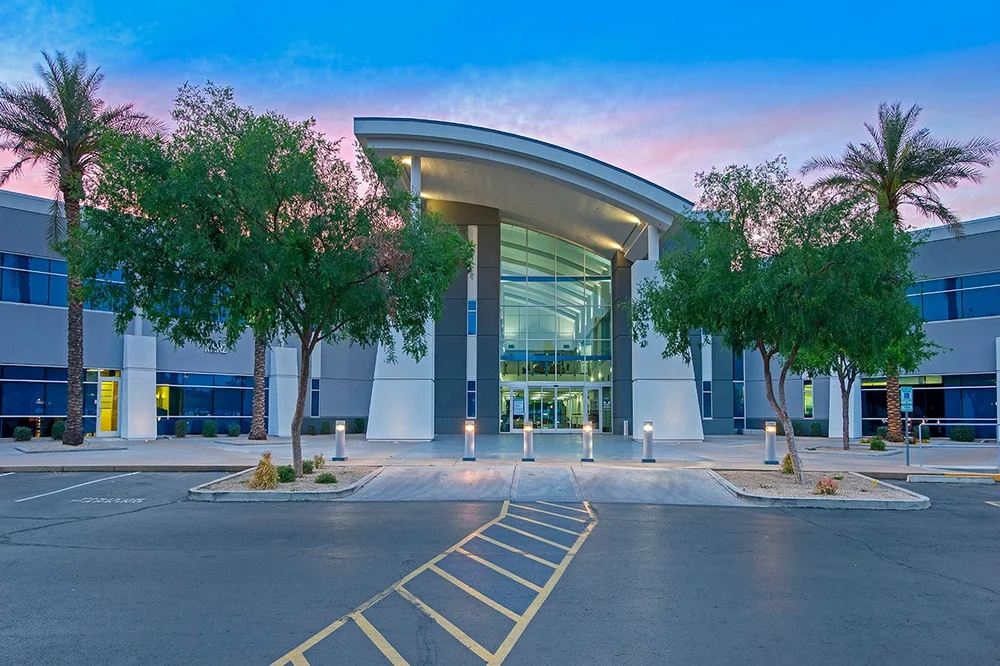
Mesa is one of the clinics where interventional procedures are performed in office, with fluoroscopy on site. When a collision injury turns out to involve a nerve root rather than muscle, the epidural steroid injection is done in the same building by the physician who examined you.
That matters in an accident case more than it does in ordinary care. Every referral out is a delay, a new record and another practice that does not know your history. Here the imaging decision, the injection and the rehabilitation sit in one chart.
Every Mountain View Pain Center chiropractor is trained in whiplash and auto-injury care. Alongside them work board-certified Pain Management physicians, the advanced-practice providers they supervise, and physical therapists — all reading the same chart, so what your adjuster or attorney receives is one consistent record rather than four partial ones.
Medical transportation is available for accident patients and can be billed to the lien, which removes the most common reason people stop coming before the treatment has finished. Translation is available in any language at every visit.
Arizona crash care is billed to the med-pay portion of the auto policy where there is one, to a lien where an attorney is acting, or to your health plan. You do not need an attorney to be treated, and nobody here will tell you to get one.
No referral is needed to be seen, and appointments are usually available within the same week. Benefits are checked before the first visit so the number is known in advance.
Most patients are billed to auto insurance or med-pay first, then health insurance for what is left. Anything still outstanding goes on the lien we hold, and payment waits until your case settles — nothing is due from you up front.
More on Mesa clinic, on care after a car accident, on whiplash, on neck and back pain after a rear-end collision, on who pays for treatment, on what kind of doctor to see, on whether a minor accident still needs a doctor, and on how long after a crash injuries can appear.
Every clinic below has Chiropractic, Physical Therapy, Acupuncture and Pain Management on one chart, so care can move between them without a new referral.
Downtown out through the north, west, south and east suburbs.
Academy, InterQuest and Tenderfoot cover the north, central and south of the city.
Harmony in Fort Collins and our Greeley clinic serve Larimer and Weld counties.
Across the Valley, from the West Valley through Phoenix to the East Valley.
Photo ID and your auto and health insurance cards.
Your claim number and the adjuster’s name, if you have them.
Any paperwork from the ER, urgent care or the police report.
Your attorney’s contact information, if you have representation.
A short note on your symptoms and when each one started.
Yes. Book directly at the Mesa clinic, and appointments are usually available within the same week.
Within days rather than weeks. Soft-tissue injuries usually peak two to three days after impact, and an early examination documents your condition at the start.
No. Pain that has persisted is a reason to be examined, not a reason to stay away, and the evaluation is the same whether the crash was last night or last spring. More: do you need a doctor after a minor accident?
Yes. Med-pay, an attorney lien, or your health plan — whichever applies. The route is set up at the first visit. See who pays for treatment after a car accident in Arizona.
No. You can be treated without one, and we will not tell you to get one.
Mesa performs interventional procedures in office with fluoroscopy on site, so that step happens in the same building rather than by referral.
Medical transportation is available for accident patients and can be billed to the lien.
Translation is available in any language at every visit, so the language barrier does not sit between you and your own treatment plan.
Mountain View Pain Center treats crash injuries in Mesa at our Mesa clinic. No referral is needed, care is billed to med-pay, a health plan or against the claim, and appointments are usually available within the same week.