

Mountain View Pain Center's licensed physical therapists treat patients at our Denver-metro clinics. Colorado is a direct-access state — you can start Physical Therapy without a physician referral. Our PTs work alongside in-house Pain Management physicians and chiropractors, so rehab, imaging, and pain relief happen under one coordinated plan. Call (720) 749-5599.
Same-week appointments are usually available. Open Monday through Thursday, 8:00 AM to 6:00 PM, and Friday, 8:00 AM to 1:00 PM.
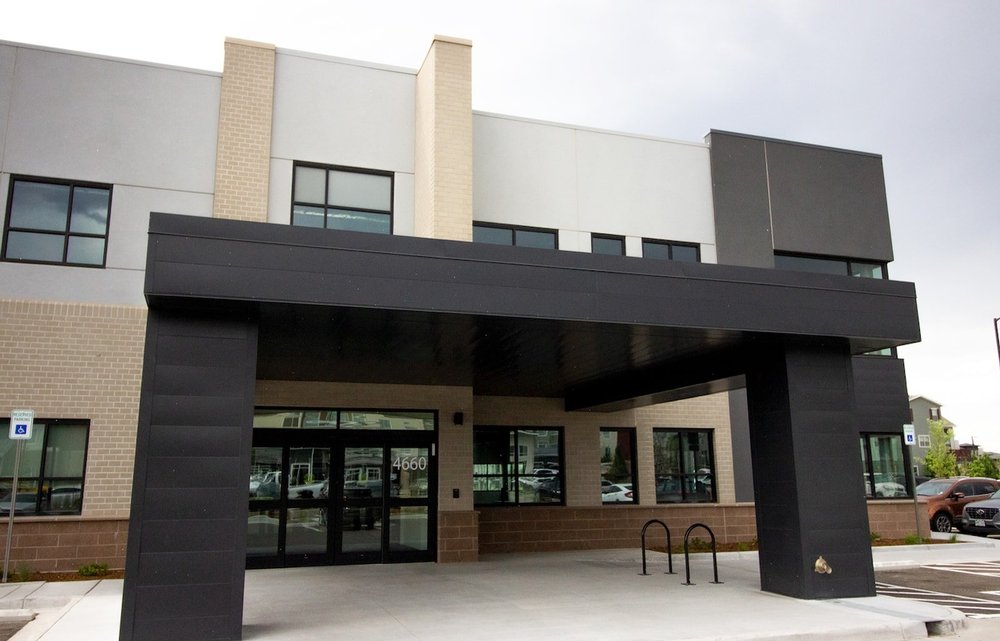

Colorado is a direct-access state for Physical Therapy. In plain terms, that means you can call a physical therapist and be evaluated without first seeing a physician for permission. Most people in Denver do not know this, and it is the single biggest reason patients lose weeks before starting rehab.
Two caveats worth knowing, because we would rather you hear them now than at the front desk:
Most Physical Therapy in Denver happens at a standalone clinic. Your therapist works from a referral note, cannot see your imaging, and has no direct line to the physician who ordered it. If rehab is not working, the feedback loop back to that physician takes weeks.
Our physical therapists work in the same clinics as board-certified Pain Management physicians, chiropractors and acupuncturists. Practically, that changes three things:
If you are trying to decide where to start, our comparison of a chiropractor versus a physical therapist is the honest version.
Learn more about our Physical Therapy approach.
And weakness related to neuropathy. See all conditions we treat.
Your first visit includes a movement evaluation, strength and mobility testing, and a plan with measurable goals plus a home program. Most patients are seen within the week.
In more detail, expect your therapist to:
Wear clothes you can move in. Bring any prior imaging and a list of medications. If you were hurt in a crash or on the job, bring your claim number.
Rehab is not linear, but a typical Denver PT plan looks roughly like this:
If you are not measurably better in the first few weeks, that is information, and the plan should change. It is also the point where having a pain physician down the hall stops being a marketing line and starts being useful.


All Denver-metro clinics are open Monday through Thursday, 8:00 AM to 6:00 PM, and Friday, 8:00 AM to 1:00 PM. See the full clinic map for the rest of Colorado and Arizona.
Recovering from a collision? See car accident Chiropractic care and personal injury care.
Call (720) 749-5599 to book at any Denver-metro clinic.
No — Colorado allows direct access to Physical Therapy. Some insurance plans still require a referral for coverage, which we verify for you before your first visit.
Most major plans, Medicare, Colorado Medicaid, workers' compensation, and auto/lien cases are accepted. Full details are on our insurance page.
It depends on your condition and goals. Your physical therapist sets a plan with milestones at the first visit and adjusts it as you progress.
Most patients are seen within the week across our Denver-metro clinics, Monday through Thursday 8am–6pm and Friday 8am–1pm.
Our Denver-metro clinics are open Monday through Thursday, 8:00 AM to 6:00 PM, and Friday, 8:00 AM to 1:00 PM. They are closed on weekends.
Often, yes. For many spine and joint problems, guided exercise and rehab meaningfully reduce pain and improve function — and our PTs coordinate with in-house pain physicians if your condition needs more than rehab alone. If surgery is already on the table, our comparison of a herniated disc injection versus surgery is worth reading first.
Your evaluation is the longest visit. Follow-up sessions are shorter and increasingly hands-off as your home program takes over the work.
Some discomfort during and shortly after a session is normal and expected, particularly early on. Pain that is sharp, or that lingers into the next day at a higher level, means the dose was wrong — tell your therapist and it gets adjusted.
Yes. Early active rehab is the standard of care for whiplash, and we document your recovery thoroughly for personal-injury and insurance claims. See car accident injury treatment in Denver.
Yes, including workers' compensation cases, with return-to-work planning built into the plan.
Licensed physical therapists — you can read about our providers before you book.
Also in Denver: Chiropractor in Denver · Pain Management in Denver · Acupuncture in Denver
Pelvic Floor Physical Therapy is available at selected Denver clinics.
Physical Therapy patients in Denver are seen by named, credentialed clinicians, and you can read about each of them before you book.
Every clinician listed here has a page setting out their training, what they work with most and where they see patients. The rest of the team is on the Colorado Physical Therapy providers page.
Physical Therapy at Mountain View Pain Center clinics across Colorado and Arizona — see Physical Therapy or the full clinic map.